
Children experience the world through their senses, and hearing plays a vital role in how they learn, communicate and connect with others. Young ears are also sensitive and more vulnerable to damage from noise than we might think.
With some awareness, parents can make simple adjustments to protect their child’s hearing while still allowing them to enjoy the sounds of childhood.
Understanding Everyday Noise
Many sounds in daily life are louder than we realise. For example, the American Speech‑Language‑Hearing Association explains that sounds at or above 85 decibels can lead to hearing damage with prolonged exposure.
Sounds at or below about 70 decibels are considered safe for long-term listening, but once above 70 decibels the risk grows. Because children’s ear canals are smaller and still developing, they are more sensitive to noise. Being conscious of both volume and duration is very important.
Creating a Quieter Home
Identifying the loudest noises in the home is a good first step. Turning down the television, choosing quieter toys, and running appliances when children are not nearby can make a big difference.
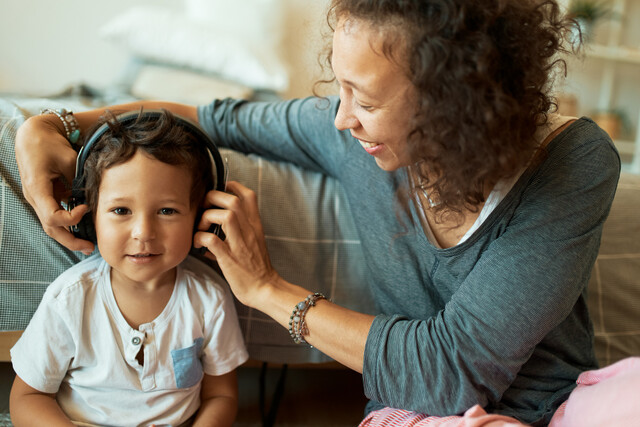
Headphones should be used at moderate volume with frequent breaks. Toys that speak, beep, or play music should be tested at the distance a child will use them. If it seems too loud, quieter alternatives or shorter play periods are safer.
Practical guidance on recognising common noise risks, choosing protective equipment, and encouraging safe listening can be found in resources like Child Ear Protection Tips, which seamlessly integrates into daily routines.
Noise in the Community
Noise exposure is not limited to the home. Sporting events, fairs, fireworks, and playgrounds can all reach high decibel levels.
Moving away from loud sources, limiting time in noisy environments, and using child-sized earmuffs or headphones are all effective steps. These simple measures significantly reduce sound exposure while still allowing children to participate in everyday activities.
Building Healthy Listening Habits
Children learn by observing adults. By turning down the car radio, stepping away from loud machinery, or scheduling quiet time at home, parents help children understand the importance of hearing protection.
Explaining why certain sounds are too loud or why quieter play is better helps children internalise safe listening habits. Small steps at home can create a lifelong awareness of sound safety.
When to Seek Advice
If a child often asks for things to be repeated, increases volume excessively, or does not respond to everyday sounds, it is wise to consult a GP or audiologist. Early detection of potential hearing issues supports healthy speech and social development.
Final Thoughts
Protecting a child’s hearing does not mean eliminating all noise. It means being mindful of volume, distance, and duration. Small changes such as choosing quieter toys, modelling safe listening habits, using protection in noisy settings, and knowing when to seek advice can make a significant difference. These measures help children enjoy a world full of sound safely and clearly.
Want to know more? Head over to our blog!